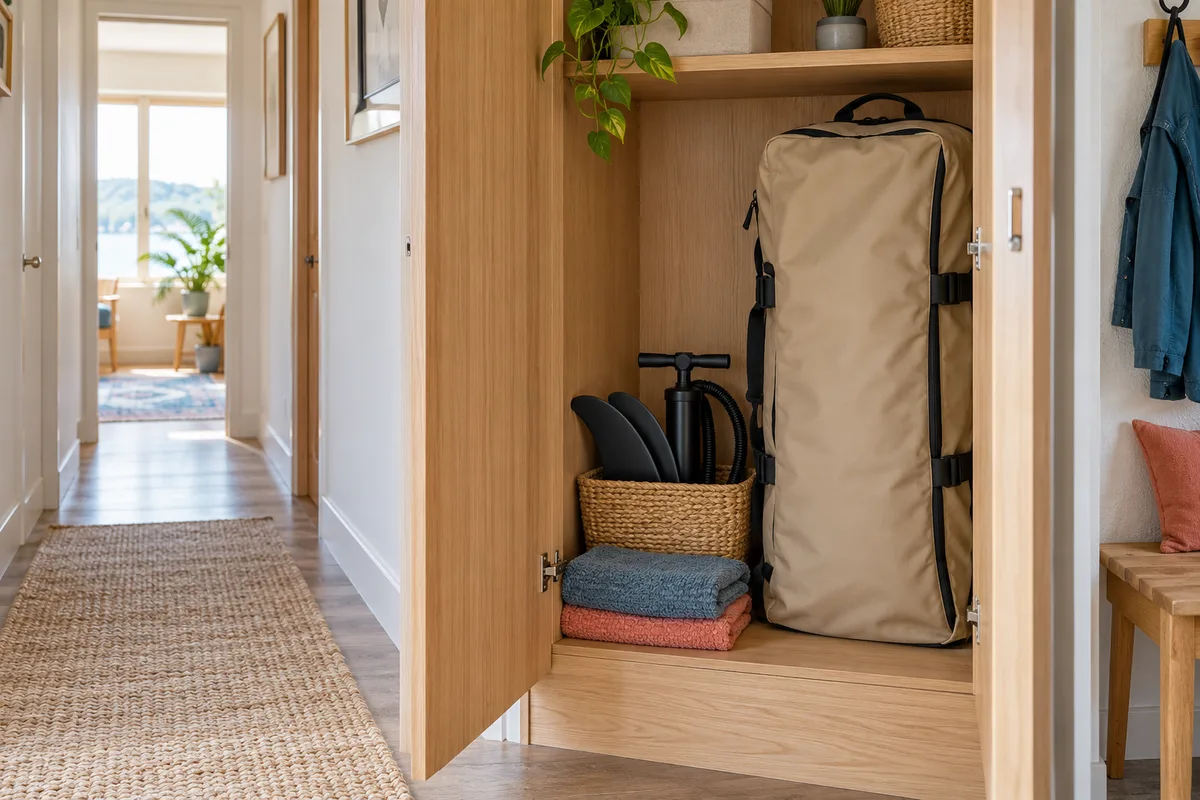
A routine for rinsing, drying, deflating and storing an inflatable SUP between sessions or over winter. Check the instructions for your exact SUP model; guidance differs between makers.
Work through the practical choices
After use, remove loose parts and rinse away salt, sand and dirt as the board maker recommends. Wipe around seams, valve and fin fittings without forcing water into openings. Let the deck, underside, folds and accessories dry separately. A towel removes standing water, but air the board in a sheltered, ventilated place until it is dry throughout. Do not seal damp kit in a backpack or box.
For deflated storage, follow the board’s folding sequence and release air as directed. Avoid sharp folds, tight straps and pressure on fittings. For inflated storage, use only the maker’s stated condition and pressure guidance, support it as instructed, and avoid prolonged sunlight, heat and heavy objects. Store in a clean, dry location away from sharp tools, leaks and clutter that could fall.
Related guides: start with the storage chooser, inflatable board care, garage storage.
Leave yourself a useful record
Save the care instructions for the exact model, then record whether it will be packed or kept inflated. Note where the bag, pump and detachable parts will go so you can check them together next time. The maker’s permitted method should drive the room layout, rather than a cupboard forcing an unsuitable fold.
If the board has been put away hurriedly after a trip, treat that as temporary. Reopen the bag and finish the maker’s cleaning and drying routine before longer storage. If you find damage, follow the manufacturer’s repair or support process before preparing the board for use again.
Sources & further reading
Manufacturer guidance checked 2026-10-25. Check the instructions for your exact board and model before acting.